


Understanding the Texas Two-Step and Its Place in Texas History
The Origins of Texas Two Step
This is the incredible story of how the history of Texas’s state dance was lost over time, and how that very loss demonstrates how deeply interconnected we are.
Ask almost anyone and they will tell you they’re not exactly sure how the Texas Two-Step came to be.
One popular theory claimed it was a version of the Foxtrot. That idea collapsed when it was shown that its proponents had incorrectly attributed the Foxtrot’s genesis to ballroom dancers. It was actually Harry Fox, a vaudevillian performer (and thereby looked down upon), who took the rhythms he encountered from the German communities on the vaudeville circuit and proclaimed it to be Fox’s Trot or Foxtrot.
Later theories suggest a mish-mash of different dances or an evolution of the French waltz. The latter appears to be confusion over nomenclature and not actual Texas history. It’s the old mistake of trying to find the first use of a word or phrase instead of looking at what you see in front of you and finding out what it means.
In reality, the Texas Two-Step is not one specific dance but a set of dances, as evidenced by the variety of footwork and rhythms seen throughout the state when the Two-Step is danced.
Texas, known as a dancing state due to our history of German and Czech dance halls (with total estimates ranging from just under 1,000 up to 2,500), is the key to understanding the origins of the Texas Two-Step.
Historian T. R. Fehrenbach points to a little-known fact that by 1850, and for many years afterward, European (mostly German) immigrants in San Antonio outnumbered both Mexicans and Anglos. The true roots of the Texas Two-Step are the German Polka and the Czech Schatzi.1
The two original versions of our state dance are still extant and danced throughout Texas today. They can be traced directly back to their German and Czech roots and are known interchangeably as the Texas Shuffle and the Texas Two-Step.
Go to any large dance floor throughout the Hill Country and you will see the Polka rhythm danced all night long as gliding or shuffling footwork, not as a traditional polka with the hop.
Unlike the waltz (three steps to three beats on each side), the Shuffle uses the Polka rhythm with three steps to two beats (a Triple Step) on alternating sides, producing the classic “boot scooting” look. Varieties that have evolved over time include the use of single steps interspersed between the triple steps. Studio versions such as the Triple Two-Step are simply ballroom-style (“ballroomized”) variations of this old Shuffle; one version even appears on the menus of many dance studios, though most studio instructors today are unaware of the dance’s history.
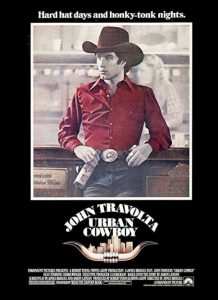
On the Czech side, the Schatzi uses side-to-side steps followed by two forward steps in a slow-slow-quick-quick rhythm. Some later varieties simply walk the rhythms, as in the movie Urban Cowboy2, or even reverse its start to quick-quick-slow-slow for competitive and studio use.
The Texas Two-Step in all its varieties, danced for close to 200 years in Texas, along with the wider family of related swing dances (picked up by both Black and white communities, danced throughout the South in its early years, and now throughout the world), were primarily derived from Czech and German Polka, Schatzi, and Brute dances. Texas Two-Step in all its varieties, along with related swing dances, continue to use moves such as the “cuddle” and “promenade” that were and still are part of those original “cute” or Schatzi dances.
Much of the history of these dances was lost in time as one of the byproducts of World War I and World War II. As anti-German sentiment that began with World War I continued and increased with World War II, many Germans left Texas, changed their names, stopped speaking German in schools or in public, and German was discouraged or “banned” from being taught in many municipalities in Texas. This had a detrimental effect on our traditional European communities, with many halls closing one by one over the years and changing the face of those communities.
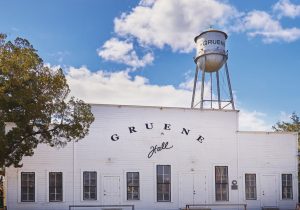 Take one of the most famous halls still in service, Gruene Hall. The German owners and the strict German community are no more in Gruene. Ironically, the hall was purchased by a family with Czech heritage.
We truly are all interconnected.
Notes:
- Lone Star: A History of Texas and the Texans, p. 285 T. R. Fehrenbach
- Urban Cowboy, directed by James Bridges (Paramount Pictures, 1980)